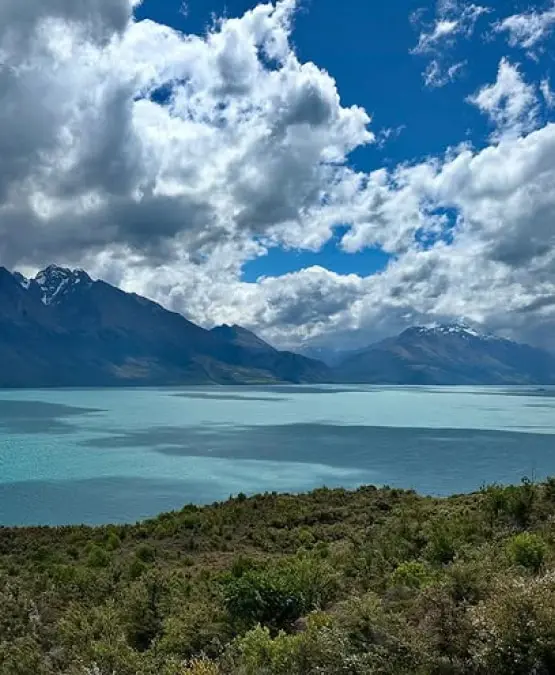
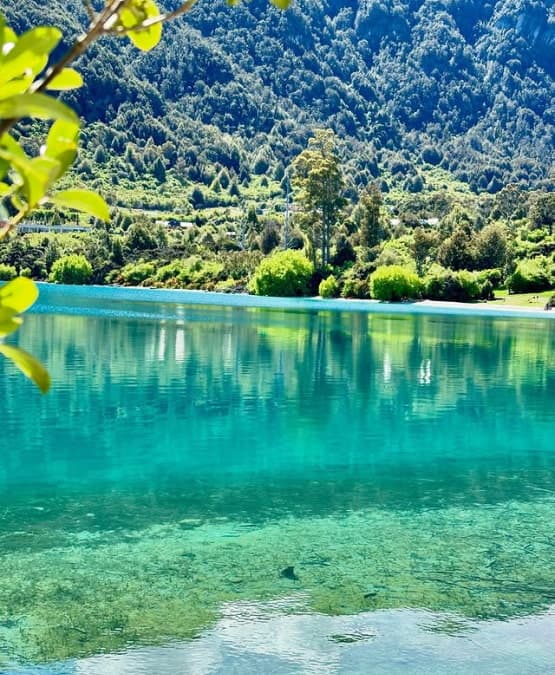
- About 45 minutes from Queenstown along the lake edge, one of the great scenic drives anywhere
- Bennetts Bluff viewpoint on the way, worth the stop before you’ve even arrived
- Paradise and the Dart River valley beyond the village
- Exclusive access to Mt Earnslaw Station, a working high-country farm of over 130 years
- Walks for every fitness level, from a flat stroll to the Routeburn Track itself
- Genuine Lord of the Rings locations, without that being the reason to go
Where Glenorchy is, and the drive from Queenstown
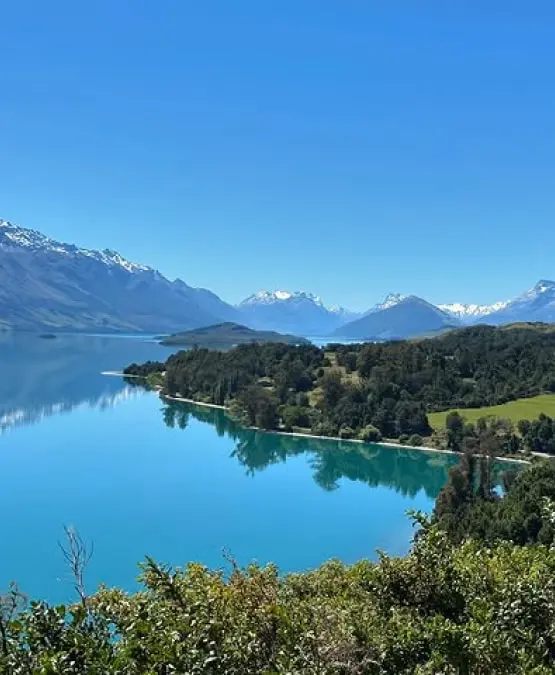
Glenorchy sits at the northern head of Lake Wakatipu, about 45 minutes from Queenstown along the Glenorchy-Queenstown Road. It isn’t a transfer to get through. It’s one of the great scenic drives in the country, and it changes character more than once before you get there.
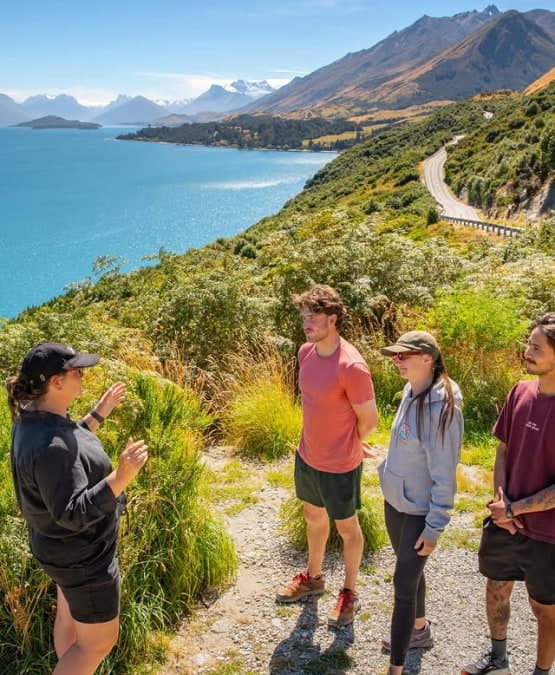
The road hugs the lake edge the whole way, with the Humboldt and Richardson mountains rising directly out of the water on the far shore. About halfway along, Bennetts Bluff gives one of the best viewpoints in the region: a wide pull-off with the full sweep of the lake and the mountains beyond it, and a genuine reason to stop rather than just slow down. From there the road climbs and drops along the bluffs before easing down into the flats around Glenorchy itself.
Glenorchy township: the Red Shed and the village
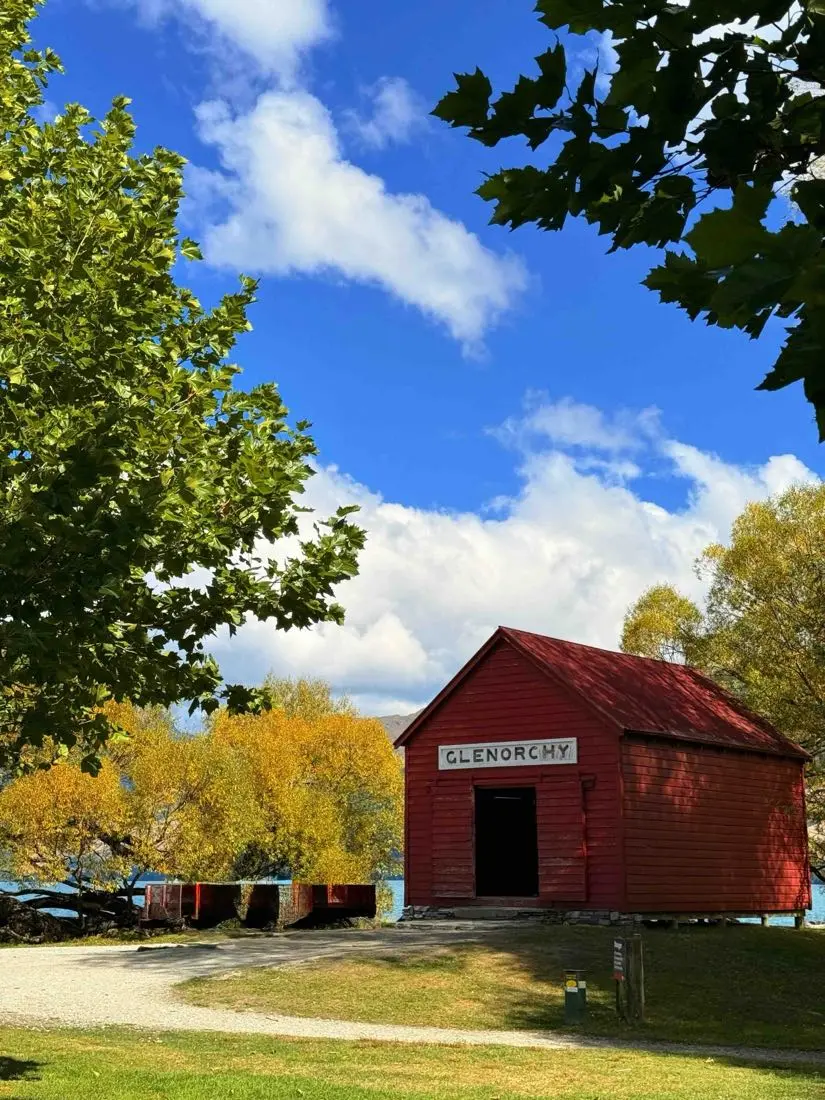
Glenorchy itself is small: a scatter of houses, a general store, a handful of places to eat, and the lake. The Red Shed on the waterfront is the village’s best-known landmark, and it’s got more history behind it than its current use as a general store suggests. It was built and run by the railways, and it’s officially New Zealand’s shortest piece of railway, classified as a station because the lake steamers were managed by the rail department, with a short stretch of track running from the wharf down to the shed itself. The TSS Earnslaw serviced it, and Mt Earnslaw Station brought its sheep down to the Red Shed to be shipped out on the steamer. Monday and Wednesday were known locally as boat days, with Friday added in peak season, and before the road through to Queenstown was built, older Glenorchy locals relied on the Earnslaw for supplies and even had their cars craned on and off the boat to drive once they reached Queenstown. It’s been rebuilt twice since, and it’s still the natural place to stop before heading further into the valley.
It doesn’t take long to see the village itself. What draws people out here is what’s beyond it.
Paradise and the Dart River
Paradise is a real place, a valley beyond Glenorchy where the road turns to gravel and the mountains close in on both sides. It’s one of the most striking landscapes in the region, open farmland and braided river flats framed by the Humboldt Mountains and Mount Alfred.
The Dart River, officially Dart River / Te Awa Whakatipu since the 1998 Ngāi Tahu settlement, runs through it, a wide, braided glacial river that carries meltwater down from the Dart and Rees valleys into Lake Wakatipu. It’s a working landscape as much as a scenic one, with high-country farms along its length, ours among them at Mt Earnslaw Station.
Mt Earnslaw Station: the high country most visitors don't see
We hold exclusive access to Mt Earnslaw Station, a working sheep and beef farm that’s been run as a high-country station for over 130 years. It sits across active farmland below Mt Earnslaw itself, one of the highest peaks in the region, and it’s still a working farm, not a set piece: stock outnumber people by a long way out here.
This is the part of Glenorchy that a day-trip drive-through doesn’t reach. Our High Country Discovery Tour and Paradise Discovery Tour both include station access most visitors to Glenorchy never get.
Walking around Glenorchy: Mount Alfred, Lake Sylvan and the Routeburn, the Lagoon Walkway, Invincible Mine Track and Whakaari Conservation Area
There’s a walk here for most fitness levels.
Lake Sylvan is the easiest: flat, forested, and roughly ninety minutes return, ending at a small lake that mirrors the mountains around it on a still day.
The Routeburn is one of New Zealand’s Great Walks, and you don’t need to commit to the multi-day version to get a sense of it. A shorter section from the road end, through red beech forest, gives a real taste of the track without the overnight commitment. Our Routeburn Valley Walk and Paradise Day Walks both cover sections of it.
Mount Alfred is the longer option, on the Isengard side of the Dart Valley, and has two different walks worth telling apart. The Mt Alfred Terraces, which we have exclusive access to as part of our Paradise Discovery Tour, takes you onto the lower terraces of Mount Alfred, with views across Paradise, the Dart River and towards Mount Earnslaw: a shorter farm-track walk of around 1,500 metres and 100 metres of elevation, roughly 1.5 hours return. It’s a proper walk rather than a stroll, with a steady climb and big mountain views along the way. The full Mount Alfred summit walk is a longer, well-known day climb out of the valley. If you’re interested, we can put you in touch with a guide who offers it.
The Lagoon Walkway is an easy, mostly flat walk close to Glenorchy township, following the edge of the lagoon with views across the Dart River and surrounding mountains. It’s a good option when you want to stretch your legs without committing to a longer hike, particularly early or late in the day when the reflections can be at their best.
The Invincible Mine Track offers a glimpse into Glenorchy’s gold-mining past as well as the landscape itself. The short track climbs through beech forest to the remains of the old Invincible Quartz Mine, with interpretation along the way and views back across the valley.
Whakaari Conservation Area is a quieter option for getting into the forest and away from the more popular tracks. The walking here is less about a single destination and more about experiencing the native bush and the landscape around Glenorchy, with several tracks and routes to choose from depending on time and conditions.
For walking done at a relaxed pace with a guide, rather than self-navigated, Paradise Day Walks covers a mix of the shorter tracks in a single day out from Queenstown.
The Lord of the Rings connection
Glenorchy and the Paradise Valley were used as filming locations for The Lord of the Rings and The Hobbit, and if you know the films, some of the country will look familiar. Isengard and Lothlórien were both filmed in this valley, seen from the road rather than as a preserved set.
But it isn’t the reason to come. No sets remain, and the valley would be worth the drive regardless of what was filmed here. If you’re not a fan of the films, nothing about the place assumes you are.